






Avida Diva



Dal 2017 si occupa di promuovere l’attività archivistica delle opere e la diffusione e conoscenza dell’opera di Andrea Bobo Marescalchi.
Dal 2017 si occupa di promuovere l’attività archivistica delle opere e la diffusione e conoscenza dell’opera di Andrea Bobo Marescalchi.
Biography of Andrea 'Bobo' Marescalchi
1954 / 1970
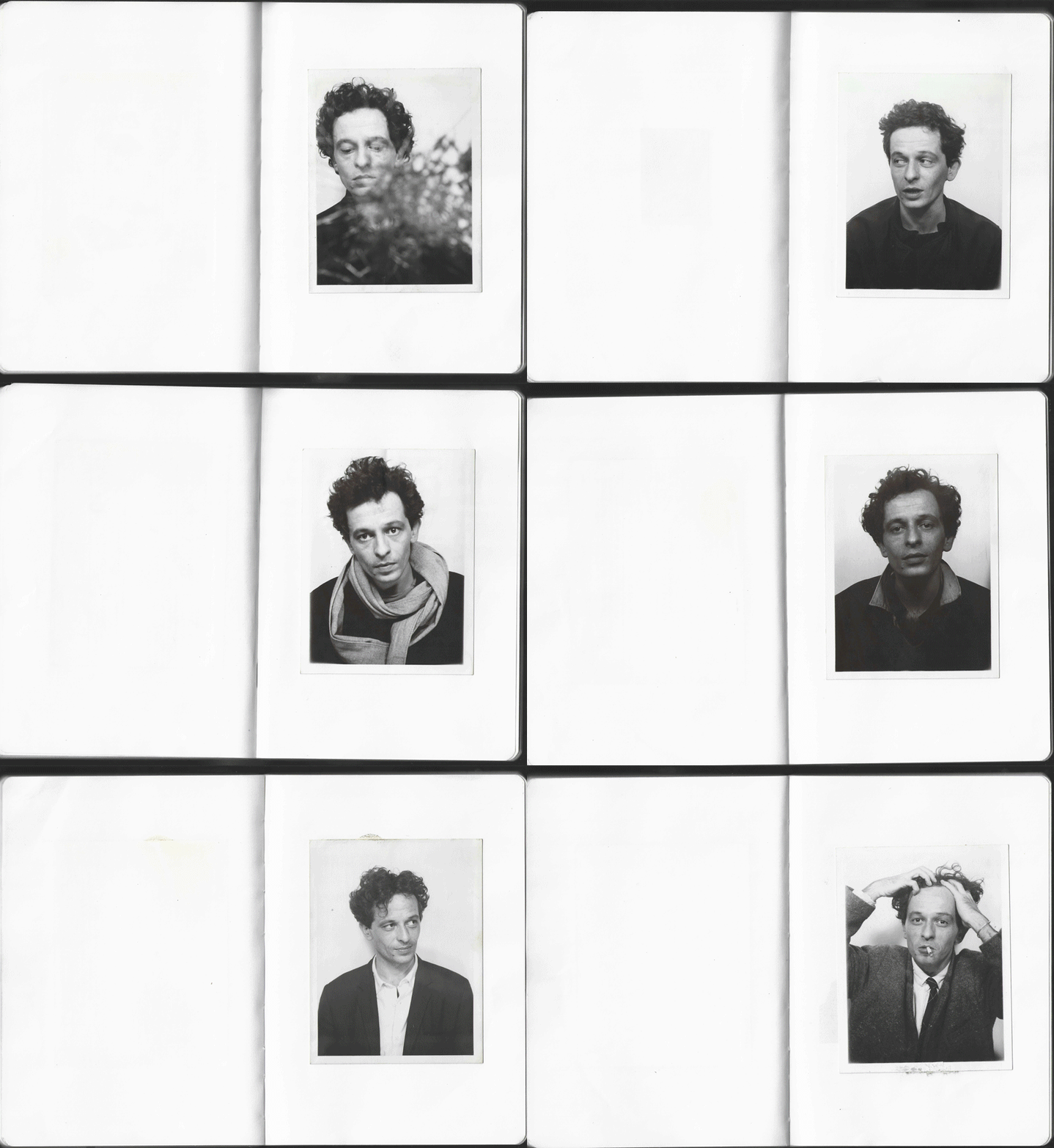
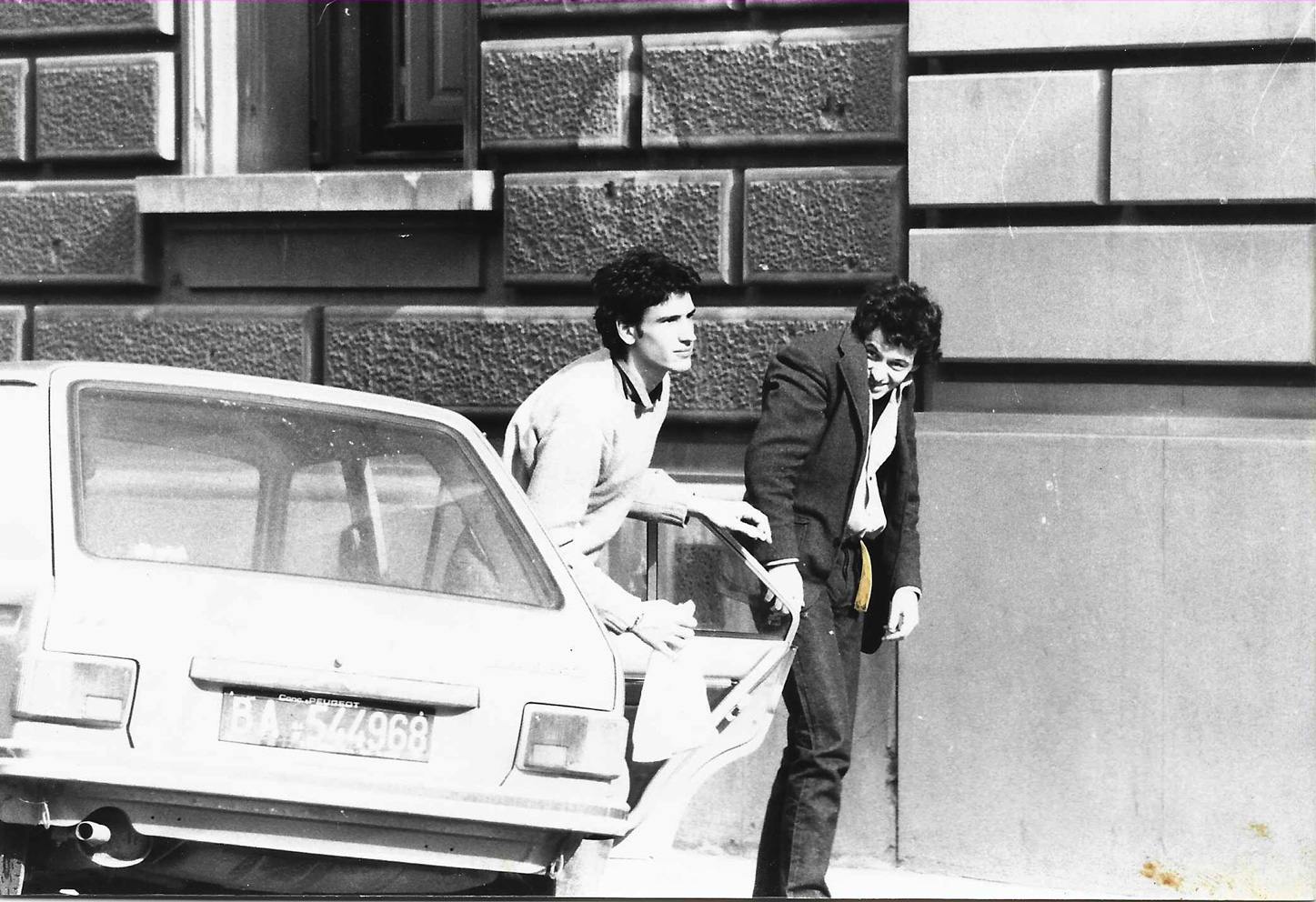
Andrea Marescalchi was born in Rome in September 1954, the son of Enrico, an Air Force general, and Laura Colonnello. The second-born, he owes the nickname “Bobo” to his sister Barbara. Due to his father’s job, the family frequently moved: from Rome to Amendola, then to Florence, Martina Franca, and finally Bari, before settling permanently in Florence. Here, Bobo attended the Liceo Classico Dante and the Liceo Artistico Leon Battista Alberti, before enrolling at the Academy of Fine Arts, which he left after two months.
Already in Bari, Andrea had made his first contacts with the art world, thanks to his friendship with Alessandra and Valentina Bonomo, daughters of the gallerist Marilena Bonomo. In those years, he was politically active, close to the Lotta Continua movement, and drew incessantly, developing a personal graphic style.
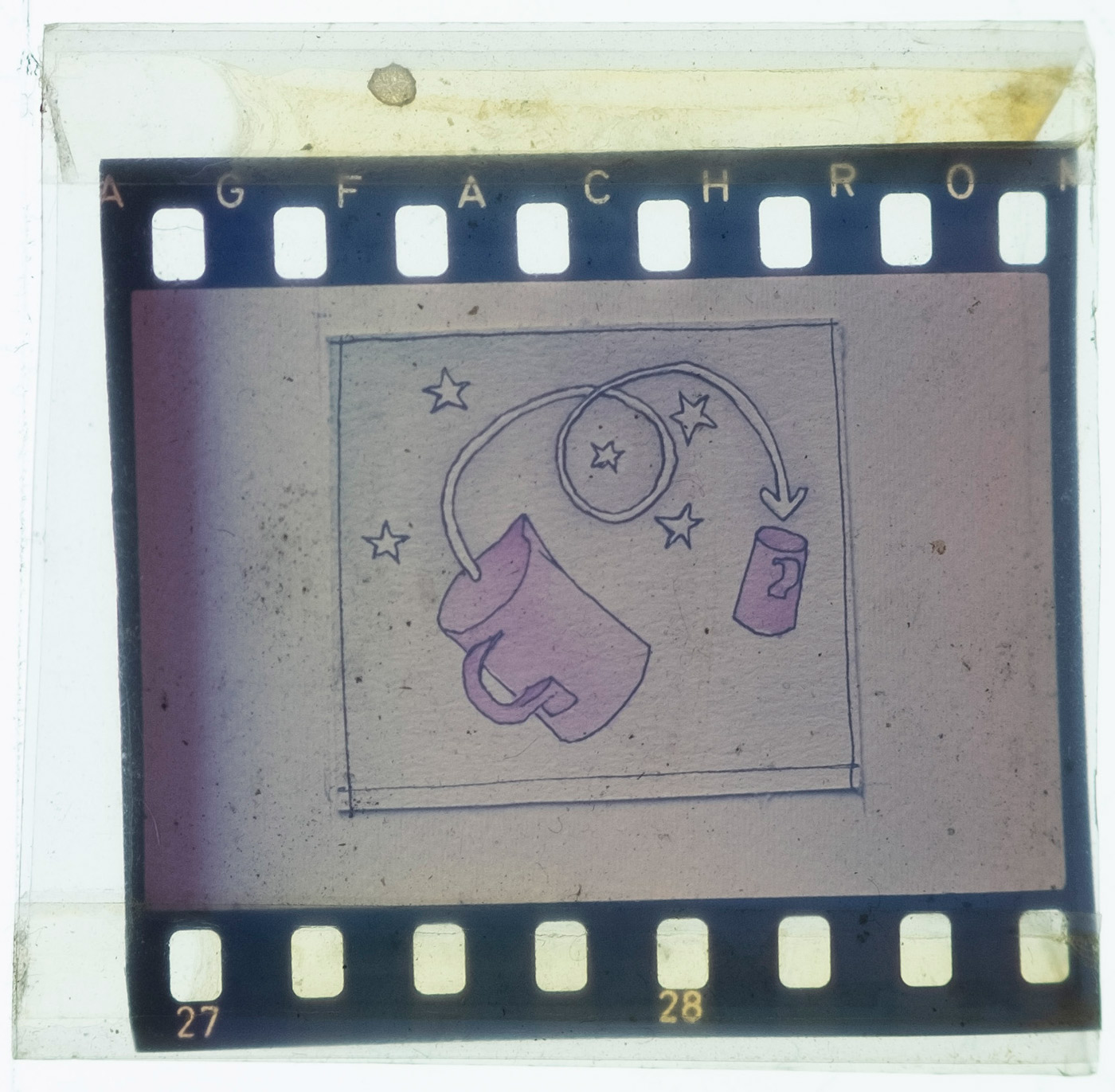
Since the early 1970s, he stood out for his graphic drawings, often influenced by letters, numbers, and stars. In 1975, he began a collaboration with Olivetti, creating graphic works for user manuals, and he also devoted himself to creating portfolios for models.
Passionate about oriental calligraphy, he studied and deepened techniques and materials, an influence that would characterize his style. Between 1982 and 1983, he studied under a Japanese calligrapher in Milan, and in 1993, he visited China.
1980
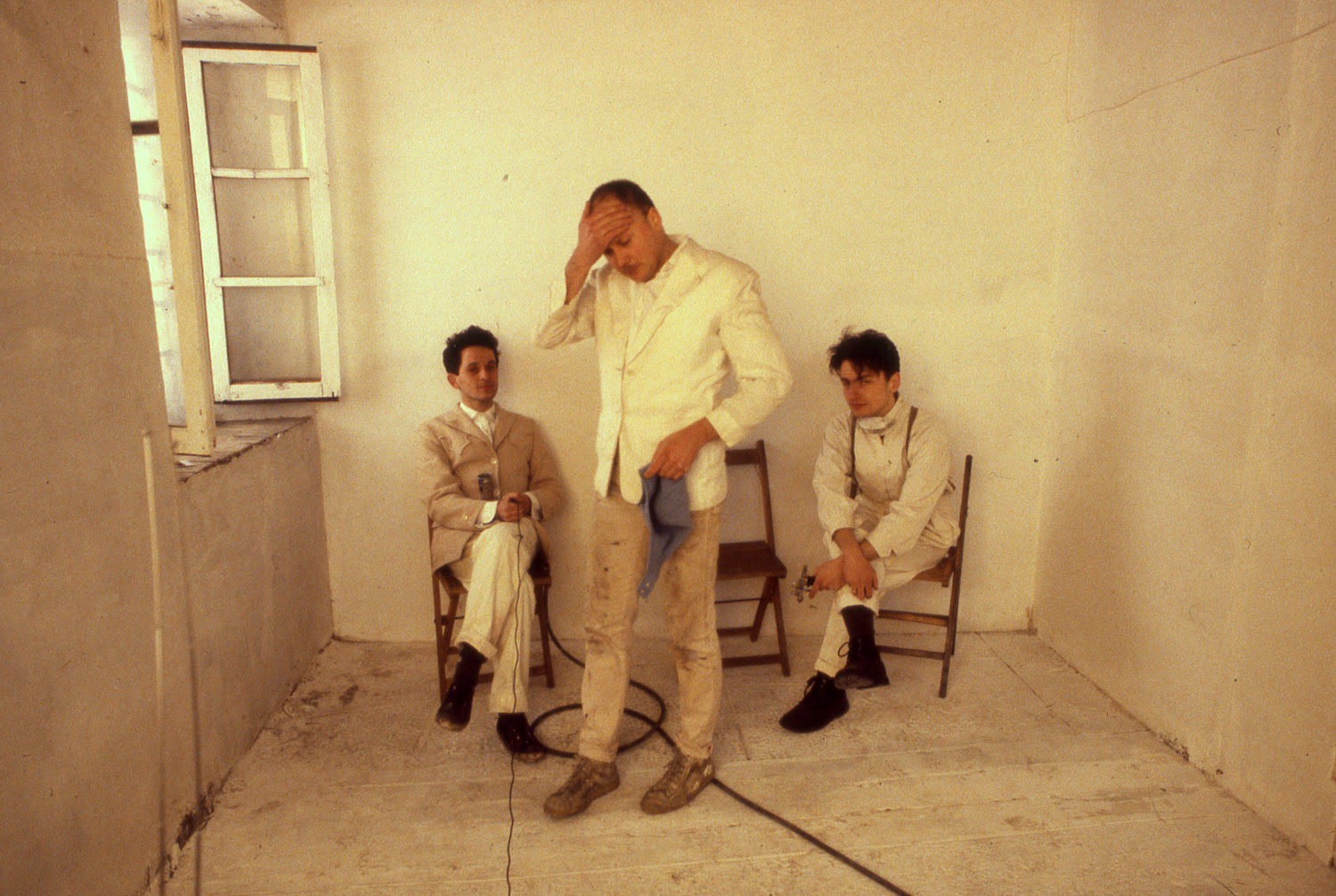
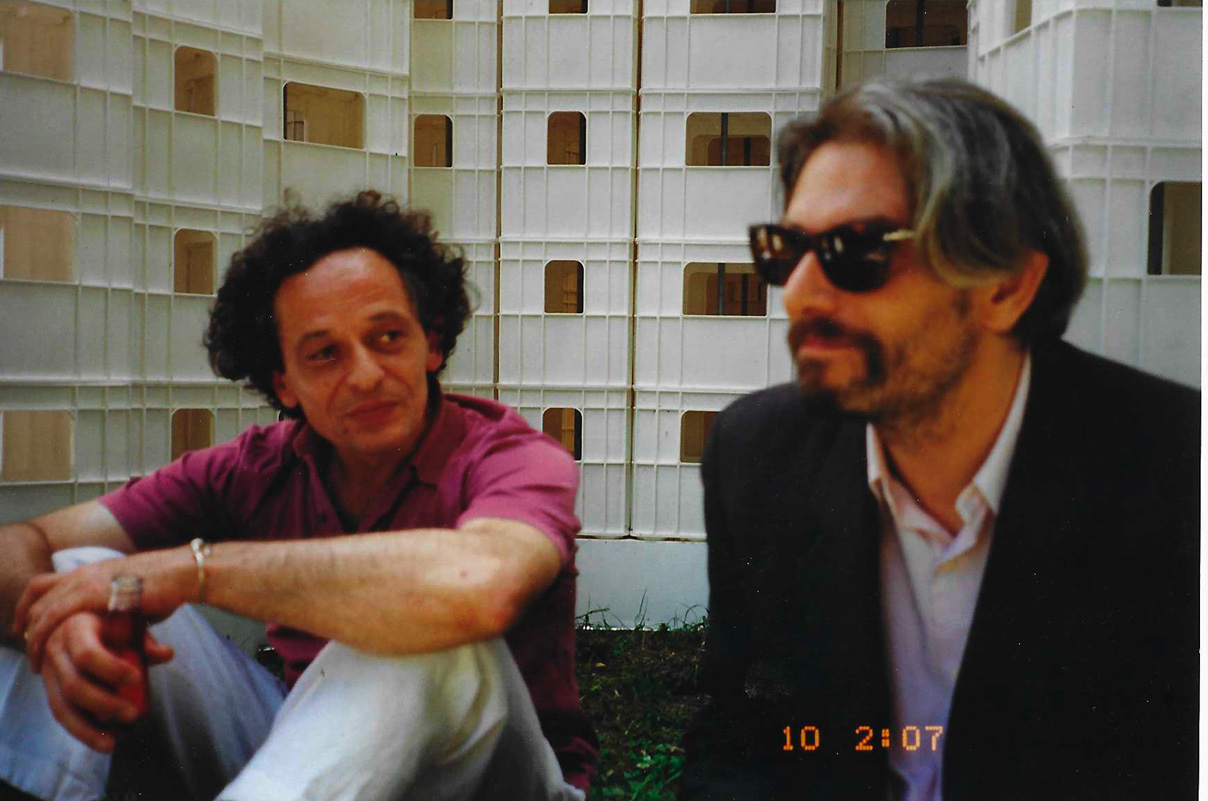
In 1981, he met Serena Bencini, who became his partner and the mother of his two children. At the Anello workshop, a creative space in Piazza Brunelleschi run by Serena and Ornella Bencini, between 1981 and 1982, he formed a close friendship with Pedro Riz à Porta and Luca Pancrazzi, with whom he shared artistic and creative experiences, becoming part of the group “Importé d’Italie,” working on collective projects. Here, he would also meet Randi Malkin Steinberger, Pier Paolo Pagano, and Kate Freedberg, all of whom were young photographers at the time.
Pagano e Kate Freedberg all’epoca tutti giovani fotografi.
In 1984, he met Alighiero Boetti and immediately began working as the hand for his drawings, such as the “Cover” designs for the magazines gathered in large sequences, and, with pencil, the elements later assembled into the “Carte” or the “Donnine” series. Marescalchi also worked with Boetti on transcribing the patterns for the “Arazzi” (Tapestries).
This collaboration ended with the death of Alighiero in 1994 but continued through work for the Boetti Archive and Foundation. Marescalchi is indeed one of the experts of Boetti’s work and a member of the scientific committee responsible for authentication and cataloging the artworks.
At the Roman studio, Andrea met the writer and poet Giovan Battista Salerno, who would also write texts on Andrea and his way of working and living art.
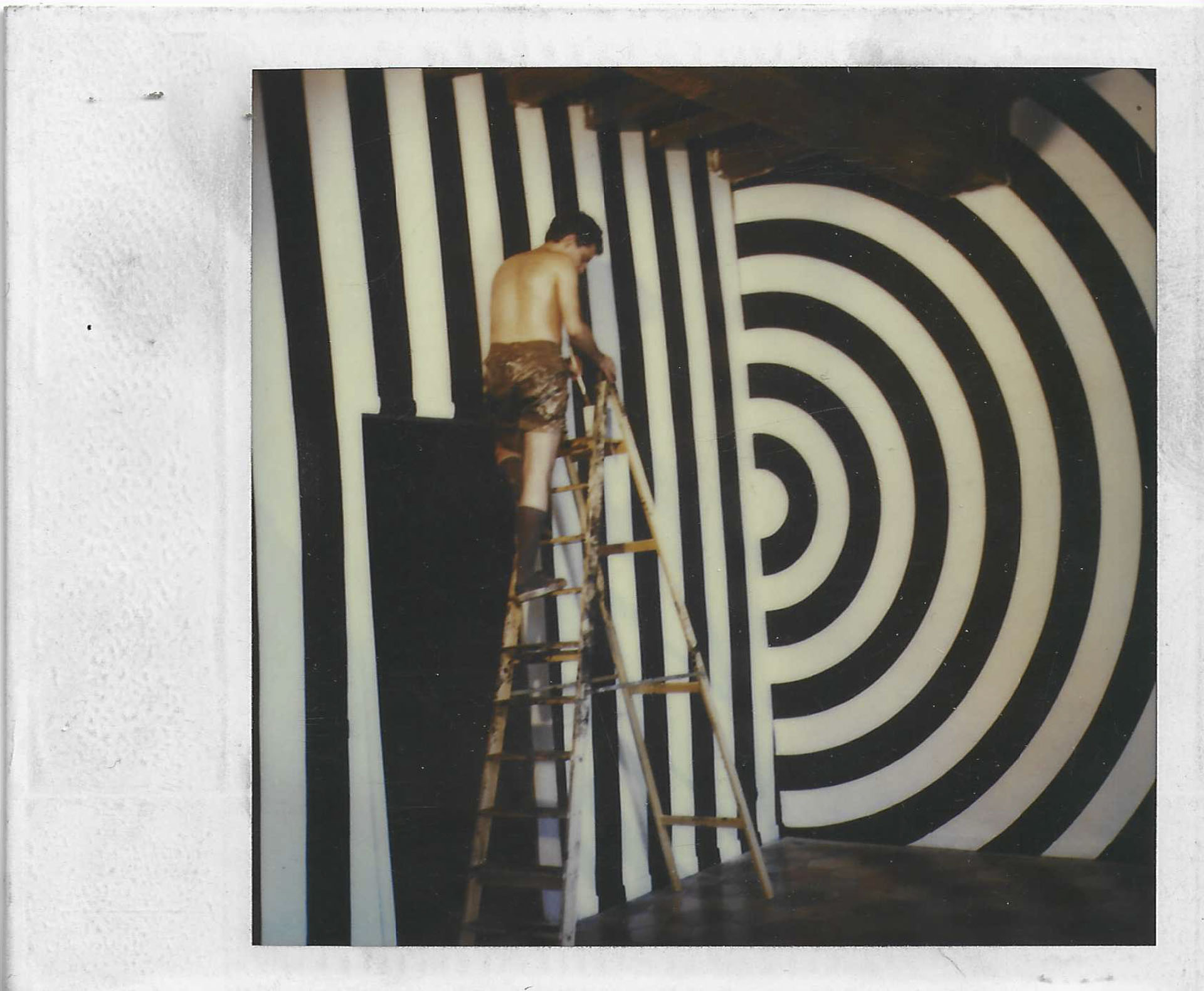
In 1985, he began his collaboration with Sol LeWitt, assisting in the installation of Wall Drawings, working not only in Italy and Europe but also in America until the early 2000s.
By now, Marescalchi was a conscious draftsman, choosing and developing his own themes and techniques, which he would never stop evolving. From the graphic-inspired drawings that characterized his works in the 1970s, as mentioned earlier, he transitioned to watercolor and ink executions primarily on very fine paper.
1990
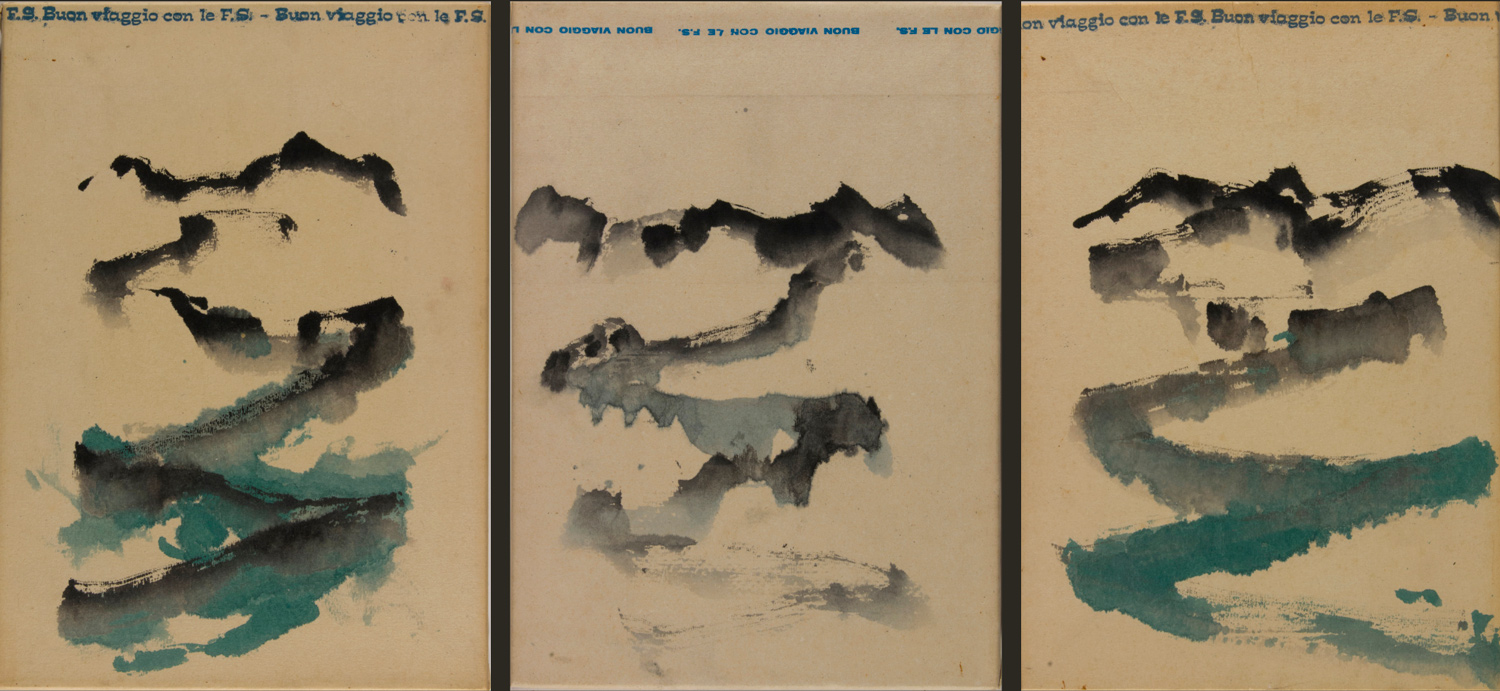
Among his early works is the series of ink drawings "Buon viaggio con le F.S." (Good Journey with the State Railways), executed on the paper towels of the Italian State Railways, which were exhibited in the end-of-season group show at the Galleria Bonomo in Rome in 1989.
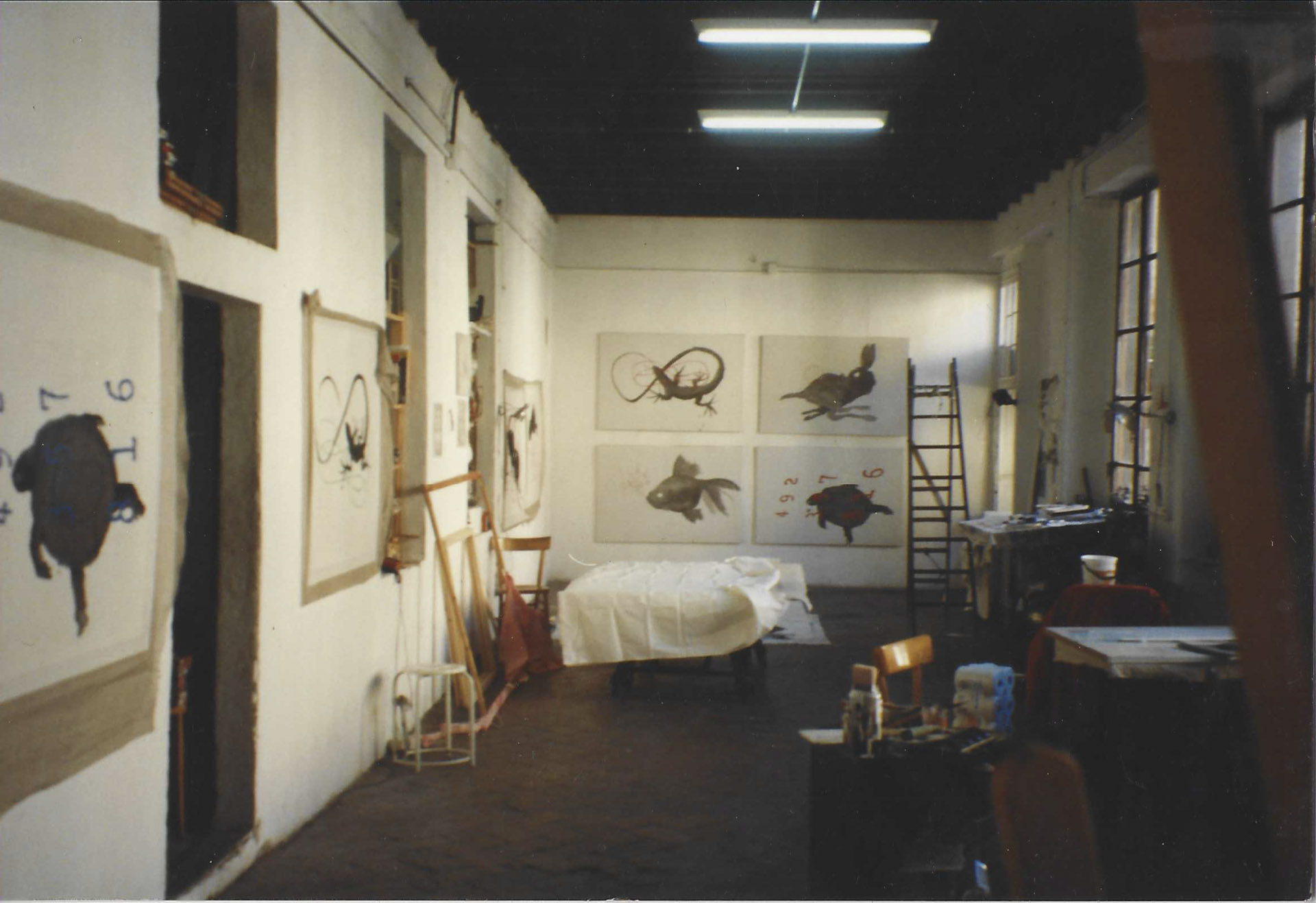
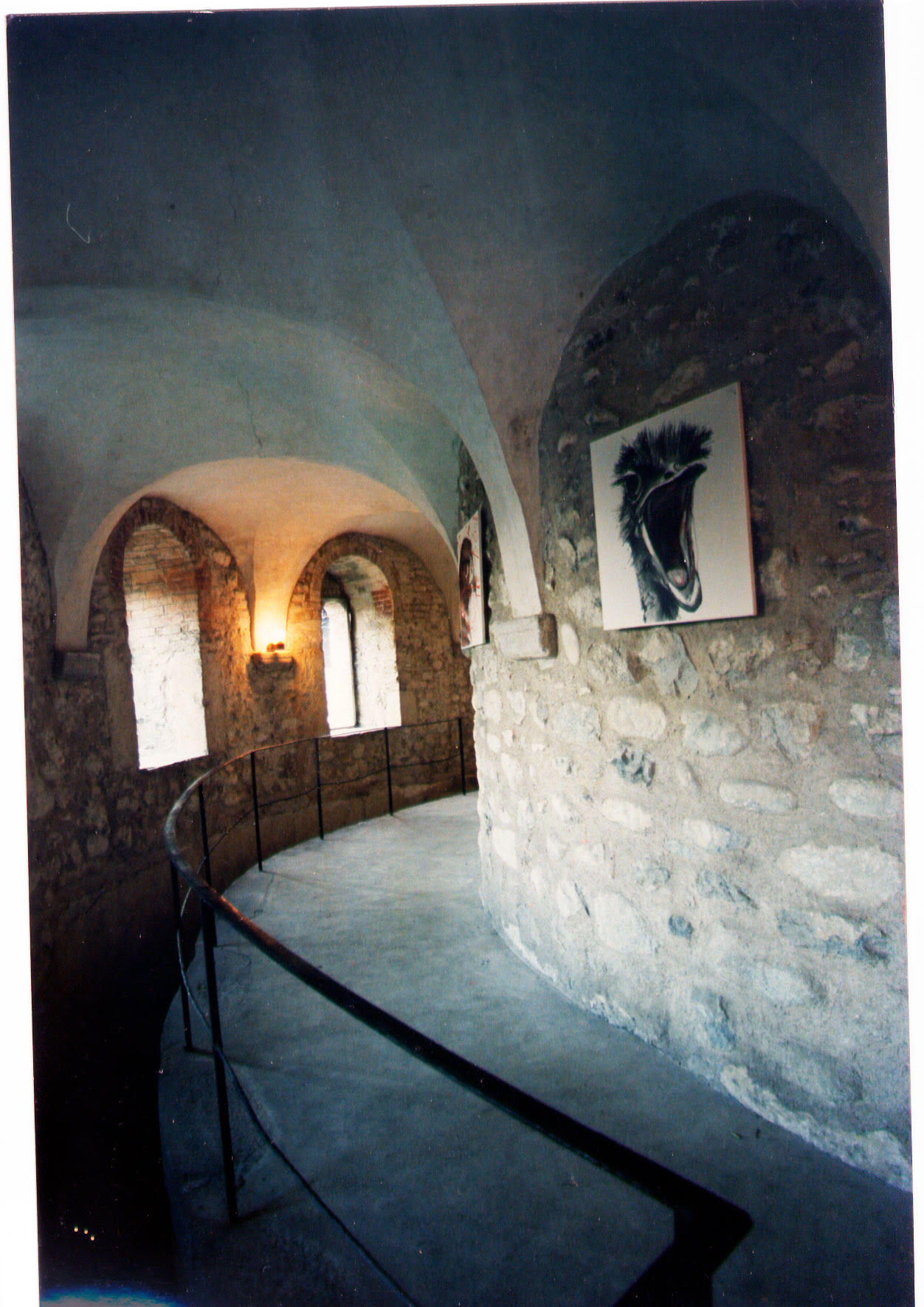
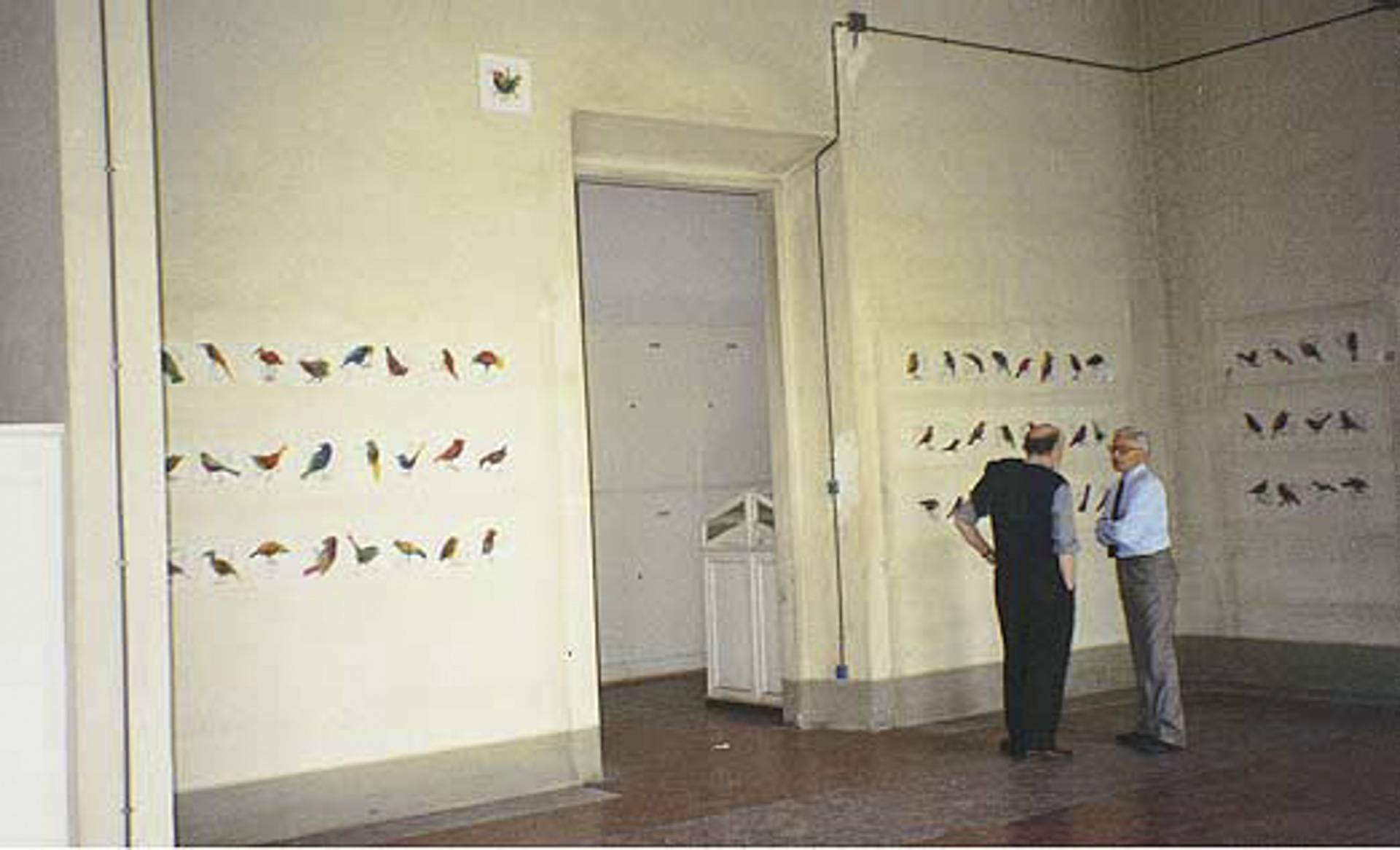
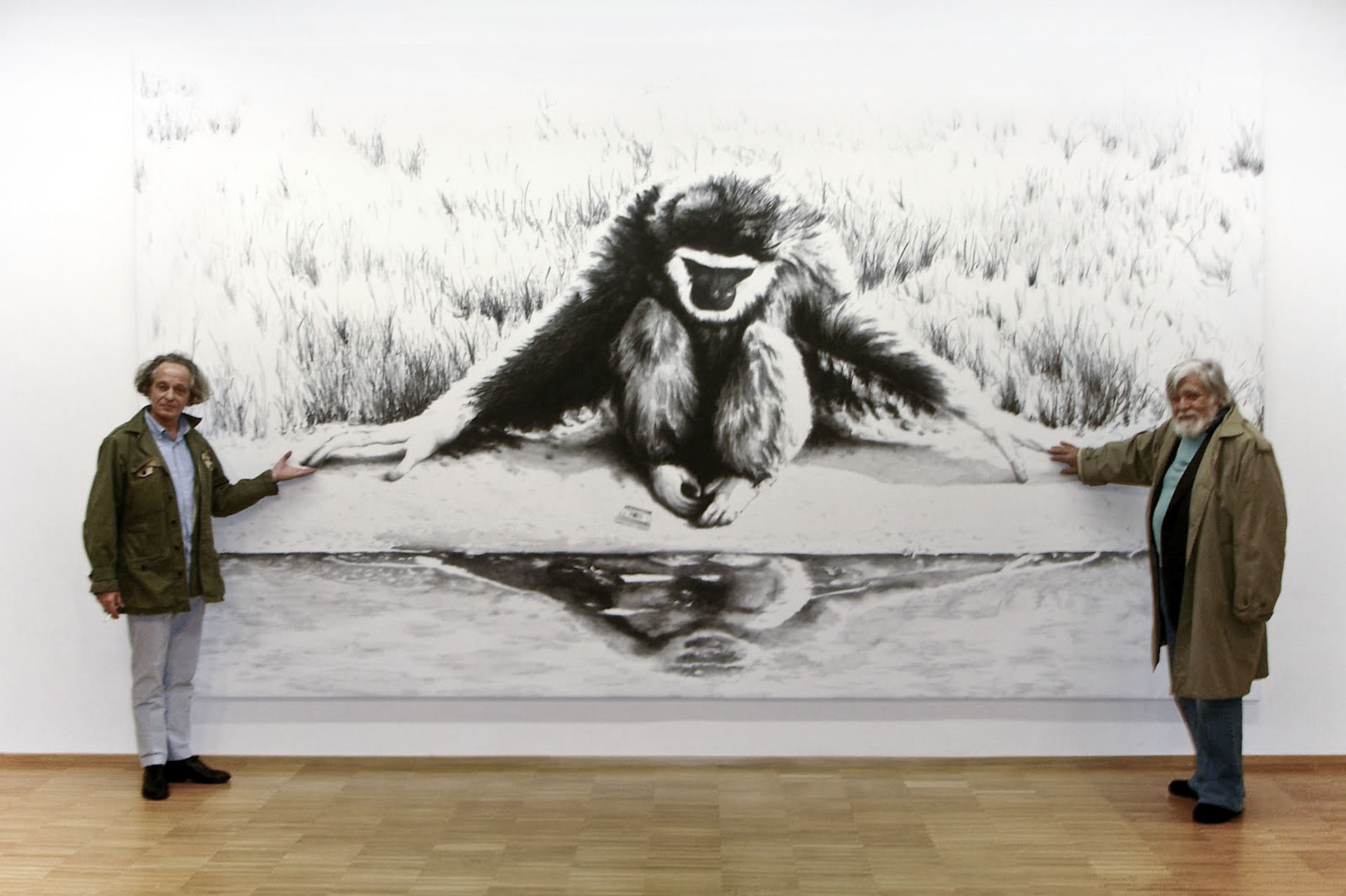
From the early '90s, Marescalchi’s work reveals one of his distinctive traits: he chooses a theme, becomes attached to it, and replicates it, as the masters of Chinese art, whom he greatly admires, did. Works featuring airplanes, with clear references to his biography and his father’s profession, as well as works on animals—goats, monkeys, snakes, birds, tigers, and others—appear. In these years, he shares a studio on Via Toscanella in Florence with Pedro and Kate.
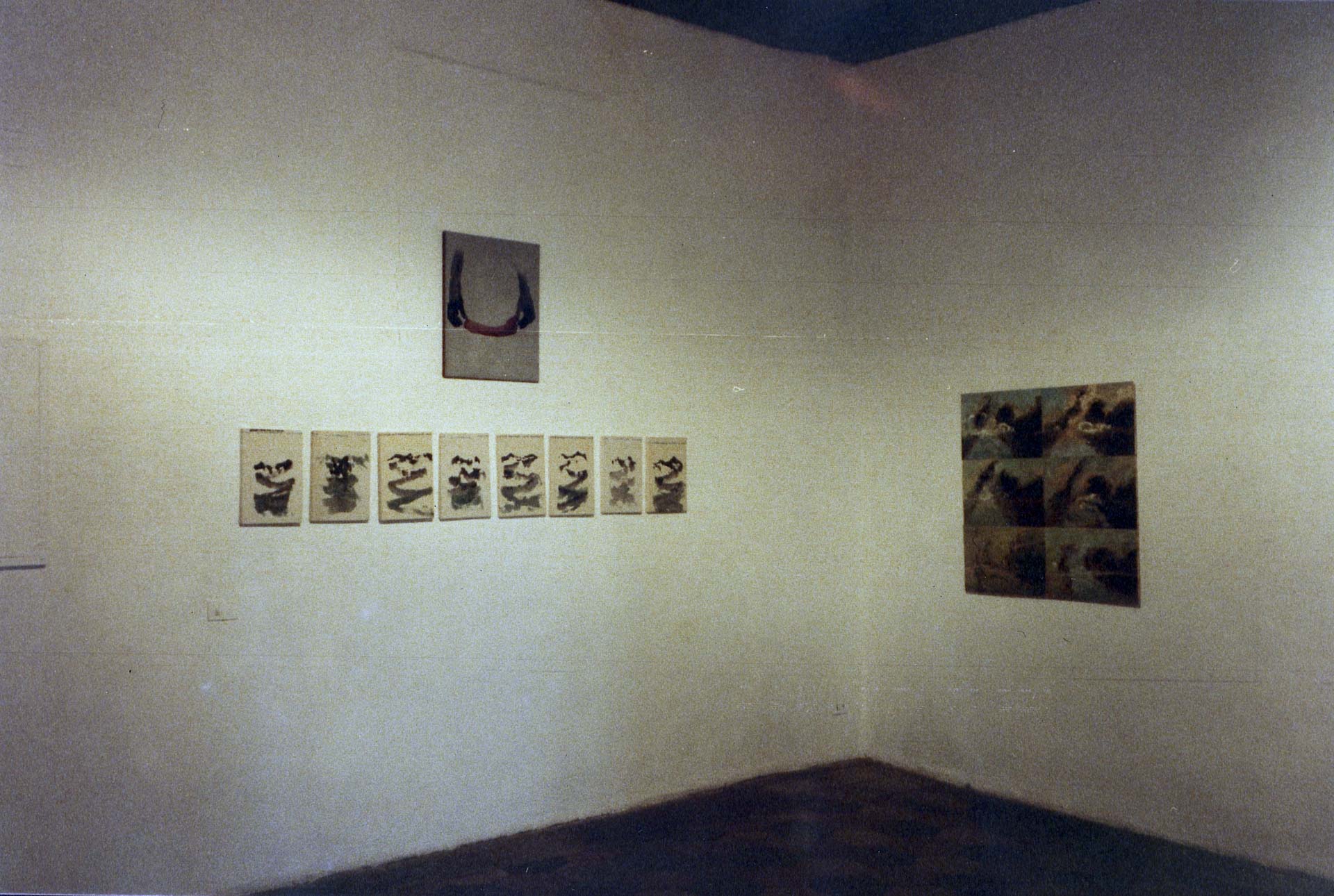
Marescalchi also plays with objects and meanings, carrying forward a reflection on art and its world, sometimes even with a subversive intent, as seen in the "Monete" (Coins) series, which was exhibited in the "Opere su carta" (Works on Paper) exhibition at the Galleria Bonomo in 1993.
In the '90s, he began projecting the image he intended to represent onto his work surface. With the advent of new technologies, the projector and images cut out from newspapers, magazines, calendars, stickers, and other paper supports were replaced by files saved on his personal computer.
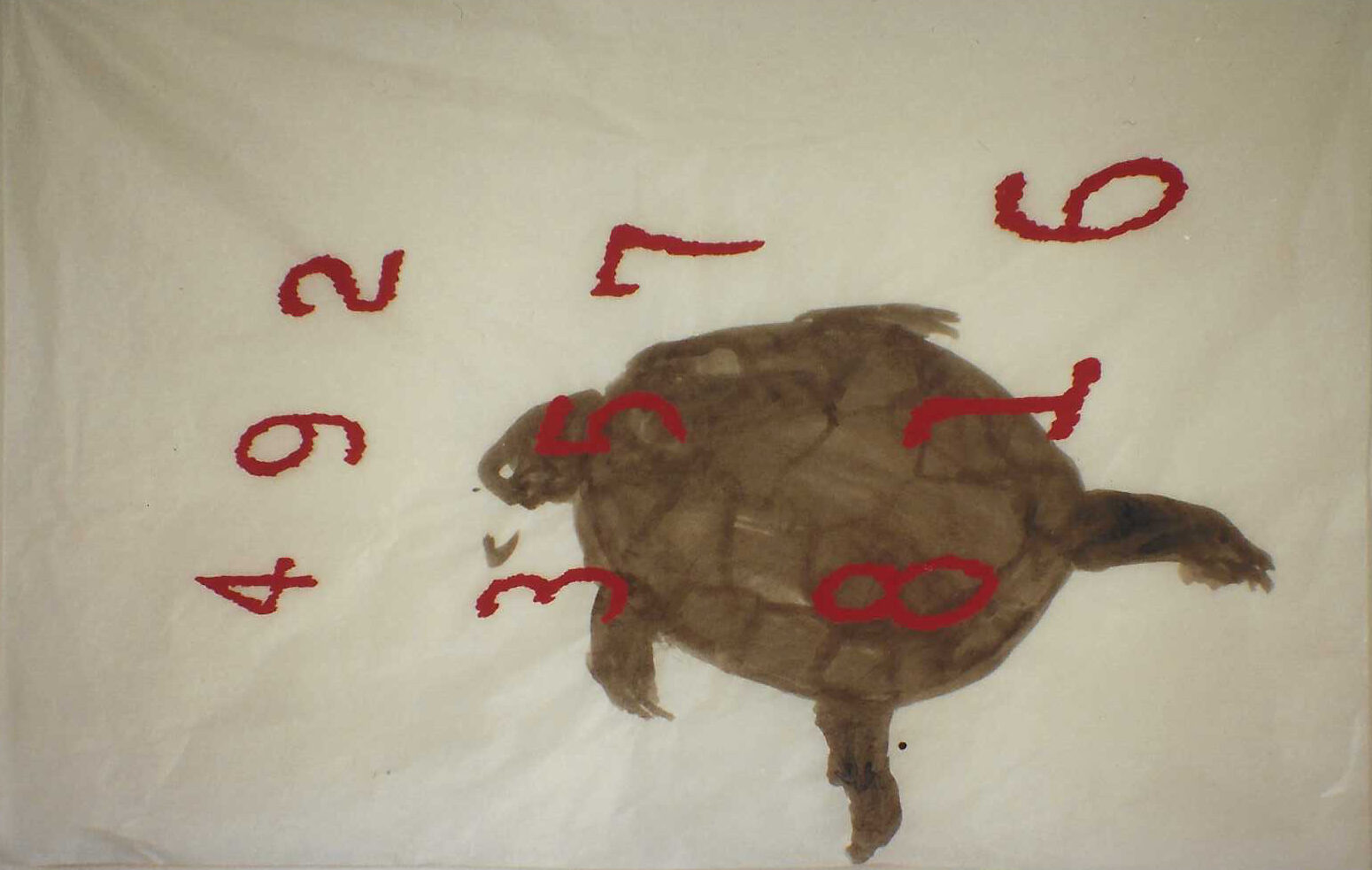
The artist develops a distinctive style in which the objectivity of the image is inextricably linked with unexpected elements that tend toward a different plane of observation, opening windows into another dimension: playing cards, magic squares, geometric shapes, symbolic numbers, and letters, in colors (mainly yellow, blue, green, and red), overlapping the base image, executed in ink, black, and shades of gray.
Bobo is fascinated by mathematics, numerical symbolism, repetition, and arithmetic perfection, and on these and other themes, he finds a valuable interlocutor in mathematician and musician Alessandro Nannelli.
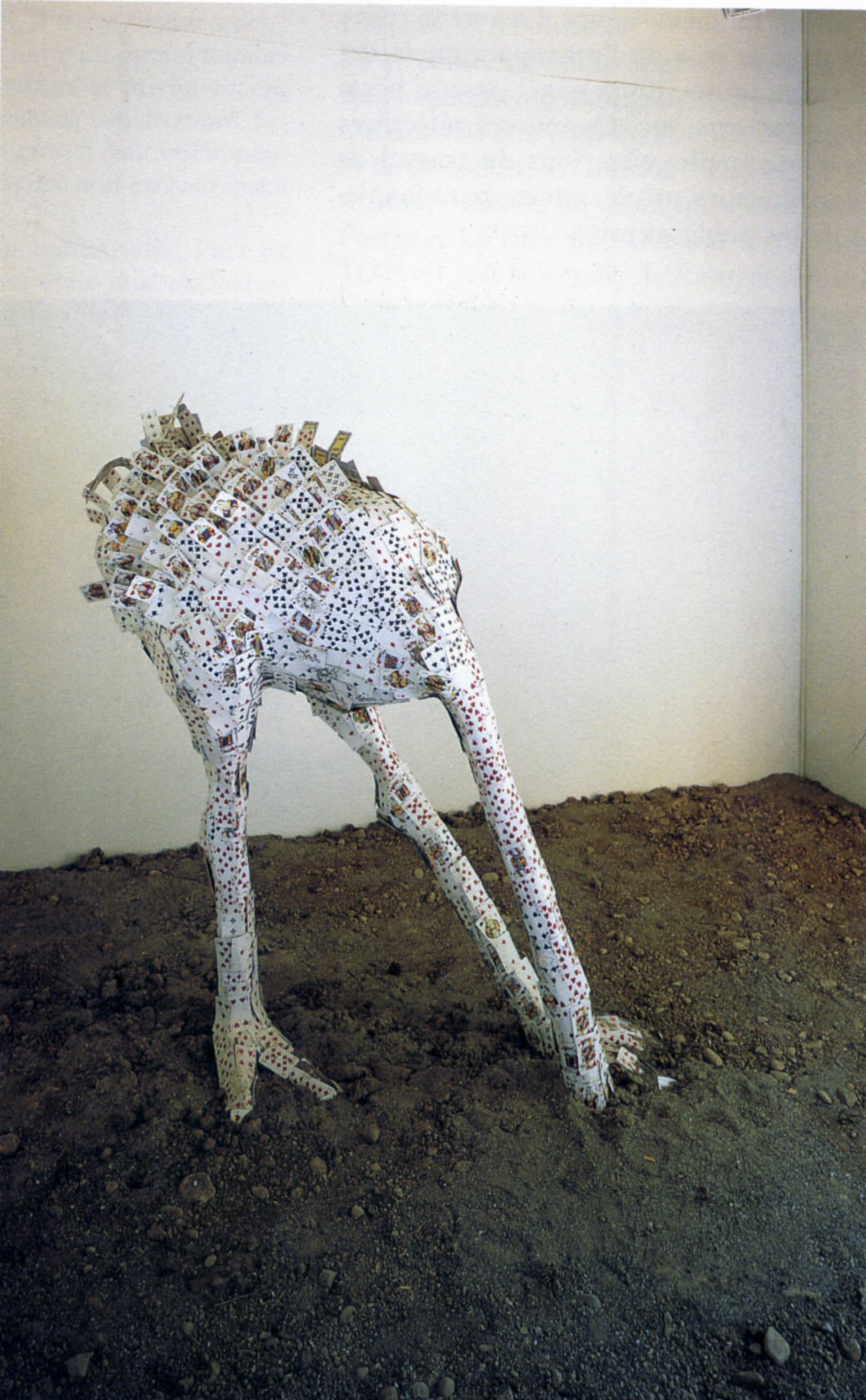
In 1995, he participated in the "Dialogues de Paix" exhibition by ART For The World, curated by Adelina von Fürstenberg, at the Palace of Nations at the UN in Geneva, for which Marescalchi created a life-sized ostrich with its head underground, using various decks of playing cards. He also participated in several other exhibitions for ART For The World, including "Méditations" in 1997, "Donna Donne" in 2005, and "L’immagine e il suo doppio" in 2010, where he exhibited "Avida Diva."
2000 / 2015
Marescalchi holds exhibitions in Florence, Rome, Milan, France, and Switzerland, while continuing his work as a collaborator. He travels extensively, both in Italy and abroad.
Alessandro Seno exhibits his works multiple times in Milan, hosting them in his gallery, and a collaboration begins that will last until the end: the first solo exhibition was in 1997; a group exhibition the following year; in 2002, "Colpo di mano sul monte dei due draghi" (A Bold Move on the Mountain of Two Dragons); and another solo show in 2010.
In 1998, the Base/Progetti per l’Arte collective was formed, in which Marescalchi is initially involved, and for which he creates the “Red Room” of Sol LeWitt, marking the inauguration of the exhibition space.
From 2002 onward, Bobo’s studio is located in Borgo degli Albizi.
During these years, new themes emerge: Bobo studies and paints many forests and mountains. The latter theme will continue to be addressed by the artist in the following years, with particular significance given to the series dedicated to Mount Kailash, exhibited in the "Dolomites" show in 2013.
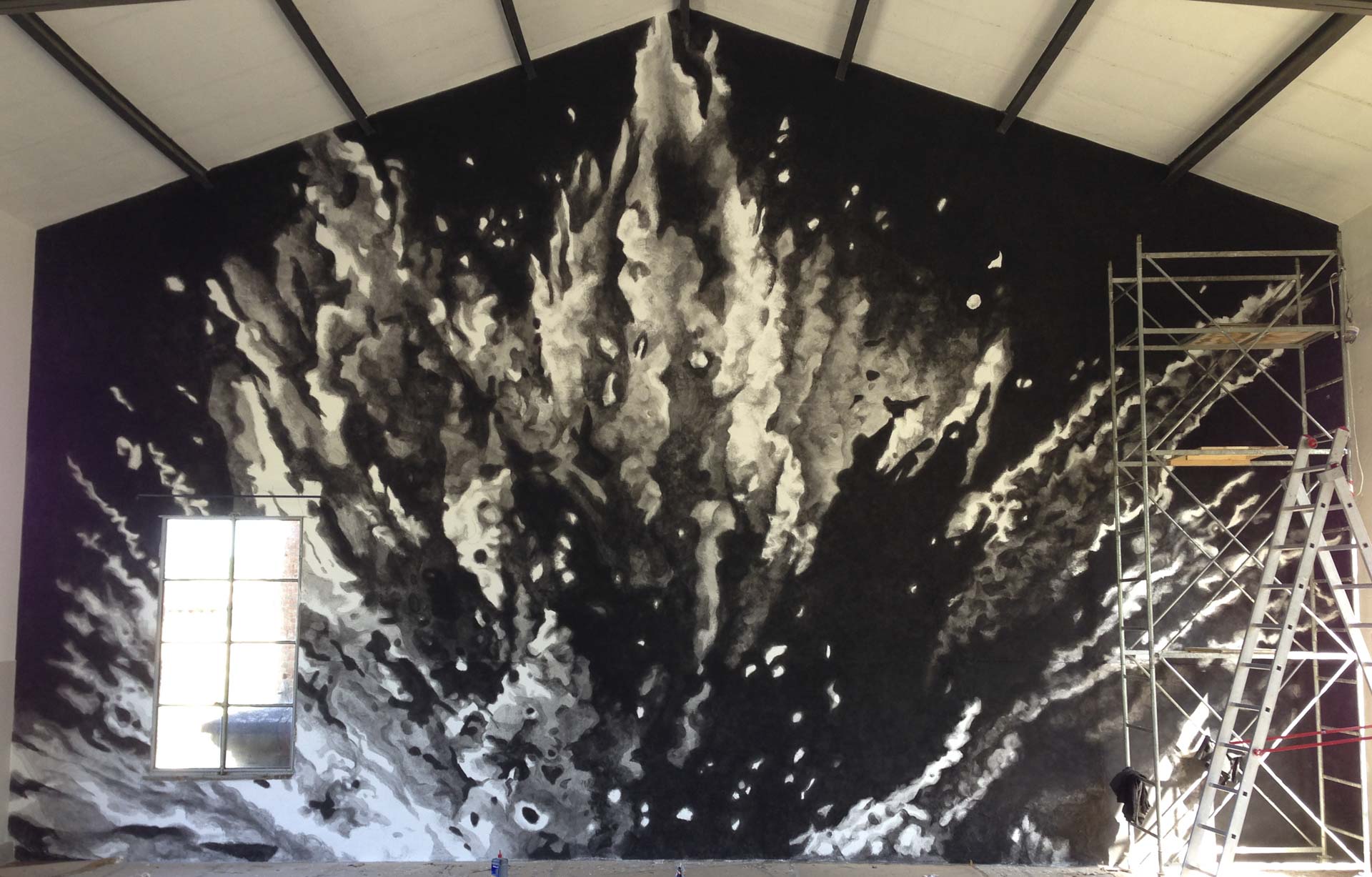
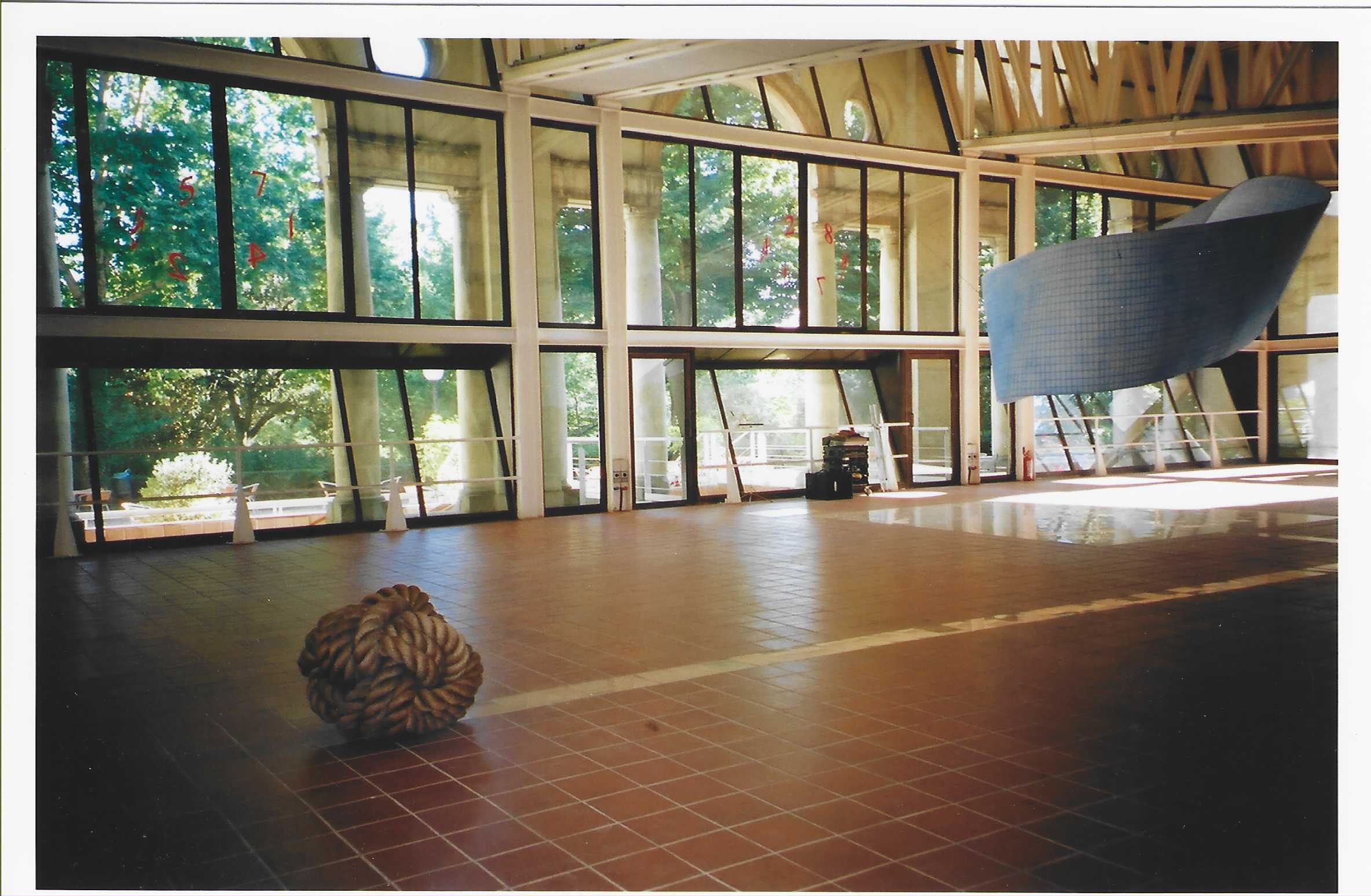
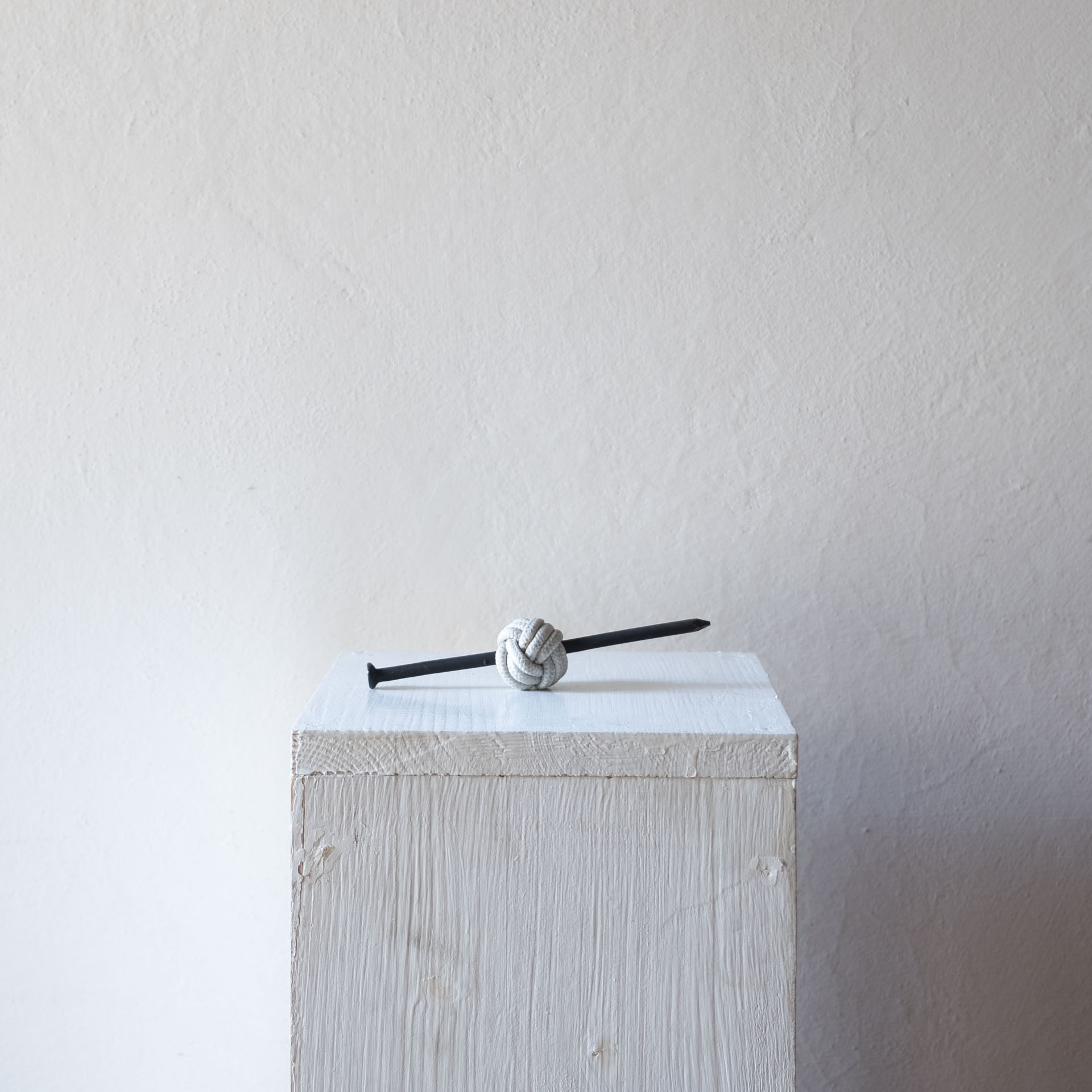
The artist’s research also shifts towards new techniques: he studies and becomes interested in knots, which he creates in large dimensions using Manila hemp. Marescalchi also paints chessboards, skulls, and explosions, one of which, enormous in size, was created for "Made in Filandia" in 2014 on a wall about 7 x 12 meters in size. These new themes reflect his attention to the changing times in which Bobo feels he is living—a change that destroys, but also signifies a new beginning.
Andrea continues to paint and dedicate himself to his work until just days before his death, which occurred on December 5, 2015.
AAM is the official archive of the works and life of the painter Andrea Bobo Marescalchi. All information, images, and documents are protected by copyright.
For information, use, or consultation of the material, please contact us.
About
Opere
Contatti
© 2025 Copyright Ass. Culturale Archivio Andrea Marescalchi - C.F. 94270010484 - Via degli Alfani 34, 50121 Firenze
Credits: Weird Studio & The Lietti's